And now to something completely different. After almost four months of clouds, I got clear skies. It is time to pull the telescope from the closet.
M42 - The Orion Nebula
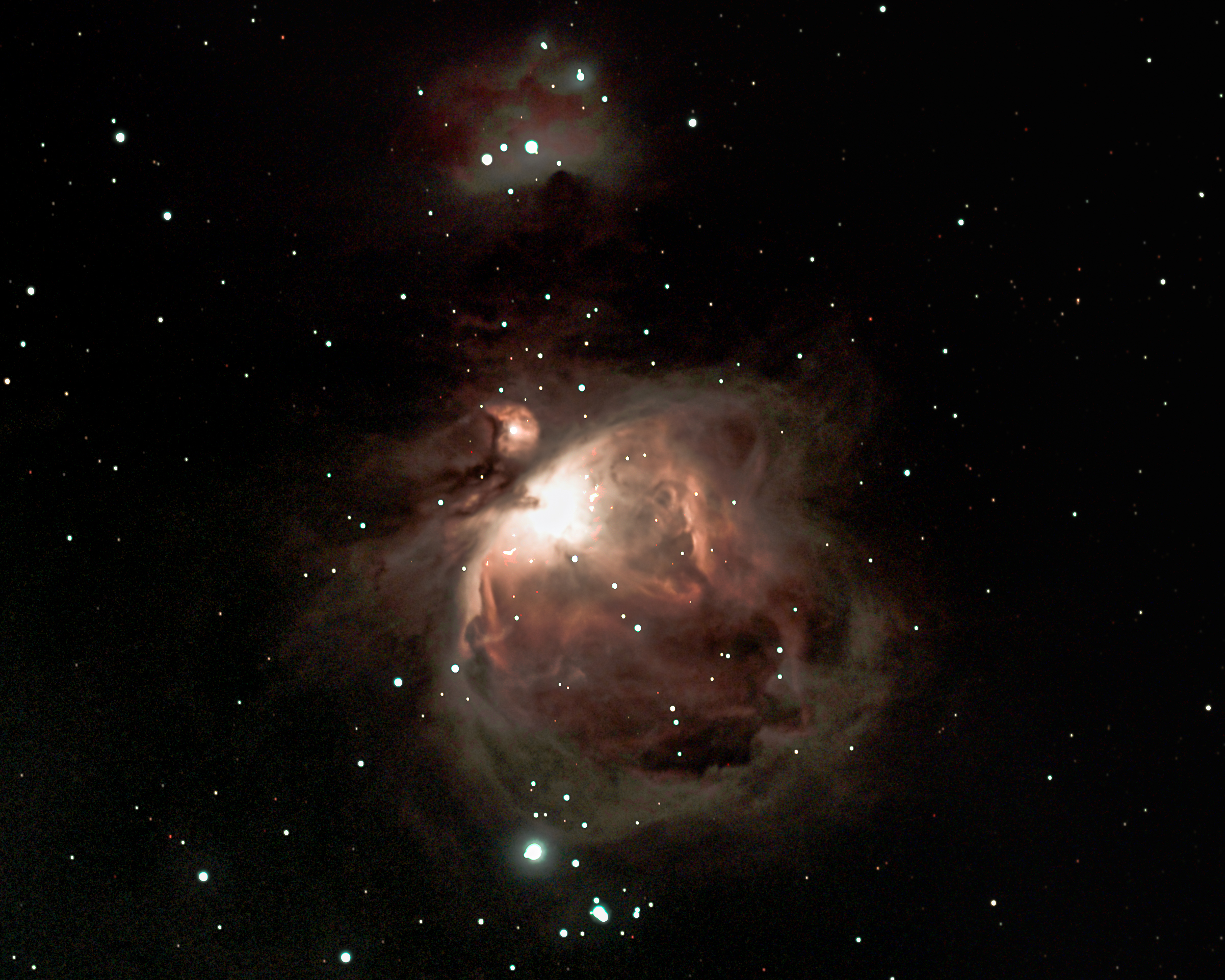
The nebula is only 1,500 light-years away, making it the closest large star-forming region to Earth. It is estimated to be 25 light-years across and it is the star formation region closest to us. It is one of the brightest nebulae and is visible with a naked eye as a middle "star" in the sword of Orion.
The photo above was made in December. Since then there was only one night with skies clear enough to venture out. Unfortunately it was also -25ºC, and my Dwarf 3 telescope froze. Well, technically there were a few other clear nights, but they also coincided with a quite bright moon.
The photo was taken in my backyard, about 2 hours of total integration. I'm pretty unhappy with how it turned out.
Fast forward to April 7th, 2026 — skies have cleared again, no moon in sight. Time to try again.
Of course, it’s quite late in the season for Orion. By the time it gets dark enough, the constellation is already only about 30° above the horizon. I had roughly 1.5 hours before it dropped too low and light pollution became too intense.
This time I drove to my favourite spot about an hour away. It’s close to Bortle 3, compared to my Bortle 6 backyard, and that makes a big difference.
Out of those 1.5 hours, I managed to shoot for about an hour before a farmer arrived to plow the field, so I had to move.
Still, the Bortle 3 vs Bortle 6 makes so much difference that even with half the total integration time, the results were better.
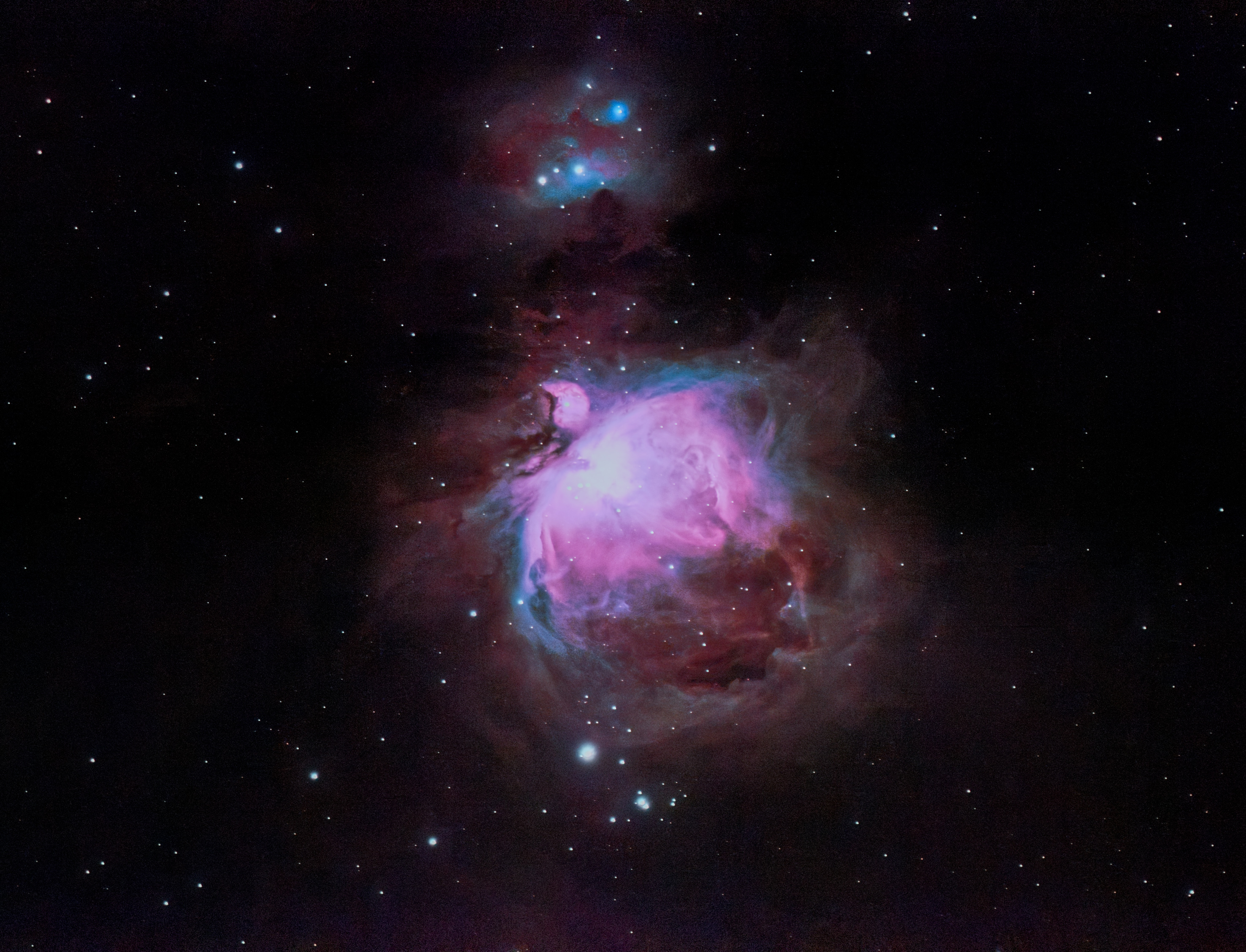
I managed to do a better job with processing as well, bringing out the blue tones.