I decided to switch gears from ranting about AI and make another post about astrophotography. Today's word of the day is "comet".
My first encounter with comets was as a kid in 1986 (I just horribly aged myself, didn't I?), when Halley's comet was flying by and everyone was scrambling to study it. Of course I didn't know about everybody, but USSR's television covered Vega missions pretty thoroughly and I was enchanted.
Since then I forgot everything about it and didn't care much about space, except for Mars missions and reusable rockets (Musk tarnished that, stupid clown), but then 2020 came and there was new comet in town. C/2020 F3 (NEOWISE) was supposed to be visible by the naked eye and suddenly I wanted to see it.
One night we drove to a rural road 10 minutes from our home to try and see the comet and take a photograph. I was not prepared, I knew nothing about astrophotography, all I had was a tripod and a 24-70 lens.
This is the picture I took
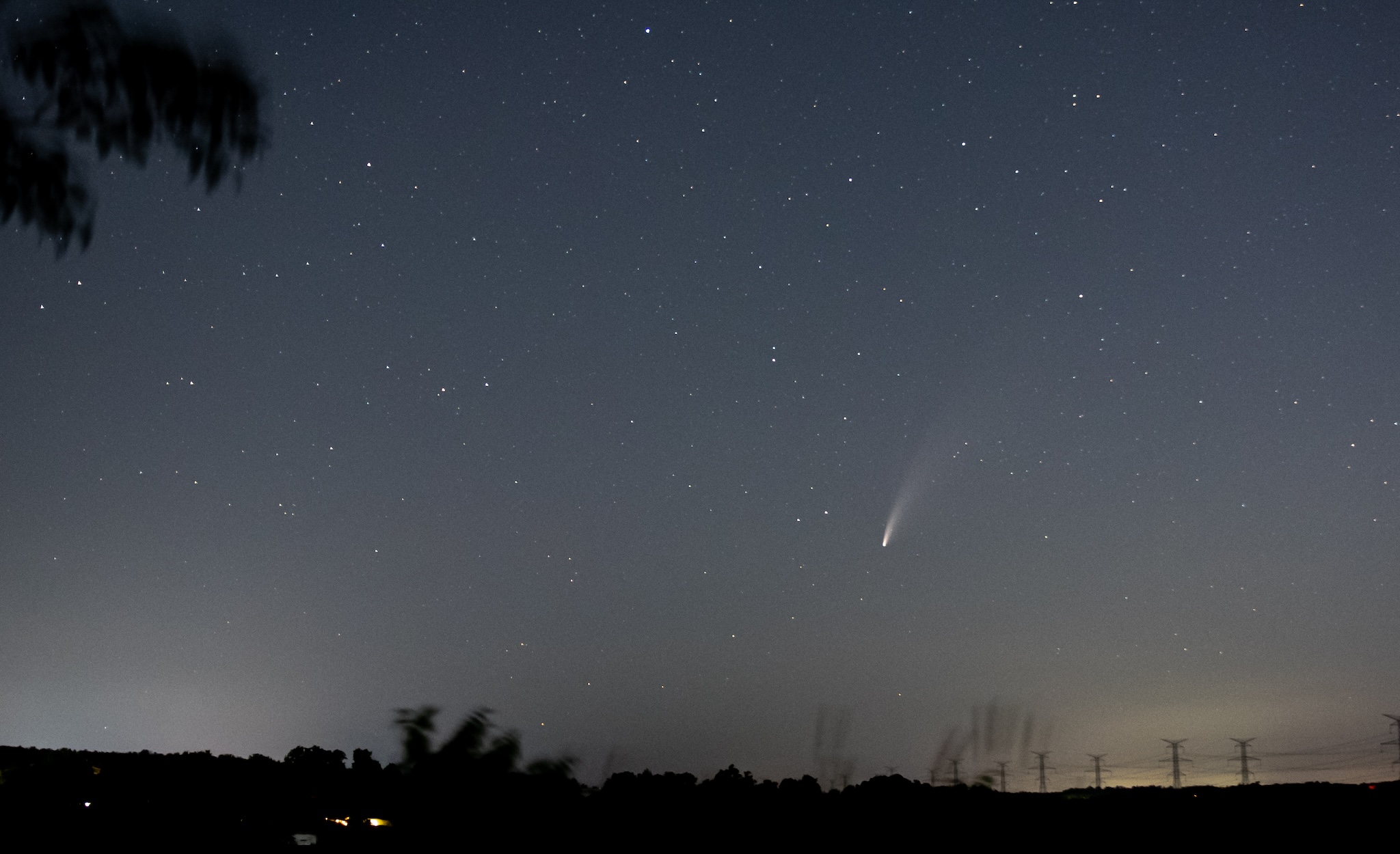 C/2020 F3 (NEOWISE)
It helped that the comet's tail was so prominent and it saved the picture, which is otherwise meh.
Several years after that, there was another comet sneaking in the skies – C/2023 A3 Tsuchinshan-ATLAS. I still had no idea how to properly photograph the comet, but I understood that I need something to make the photo better.
The first outing didn't end up too good – I was barely able to find the comet in the skies and when I found it, it was too high.
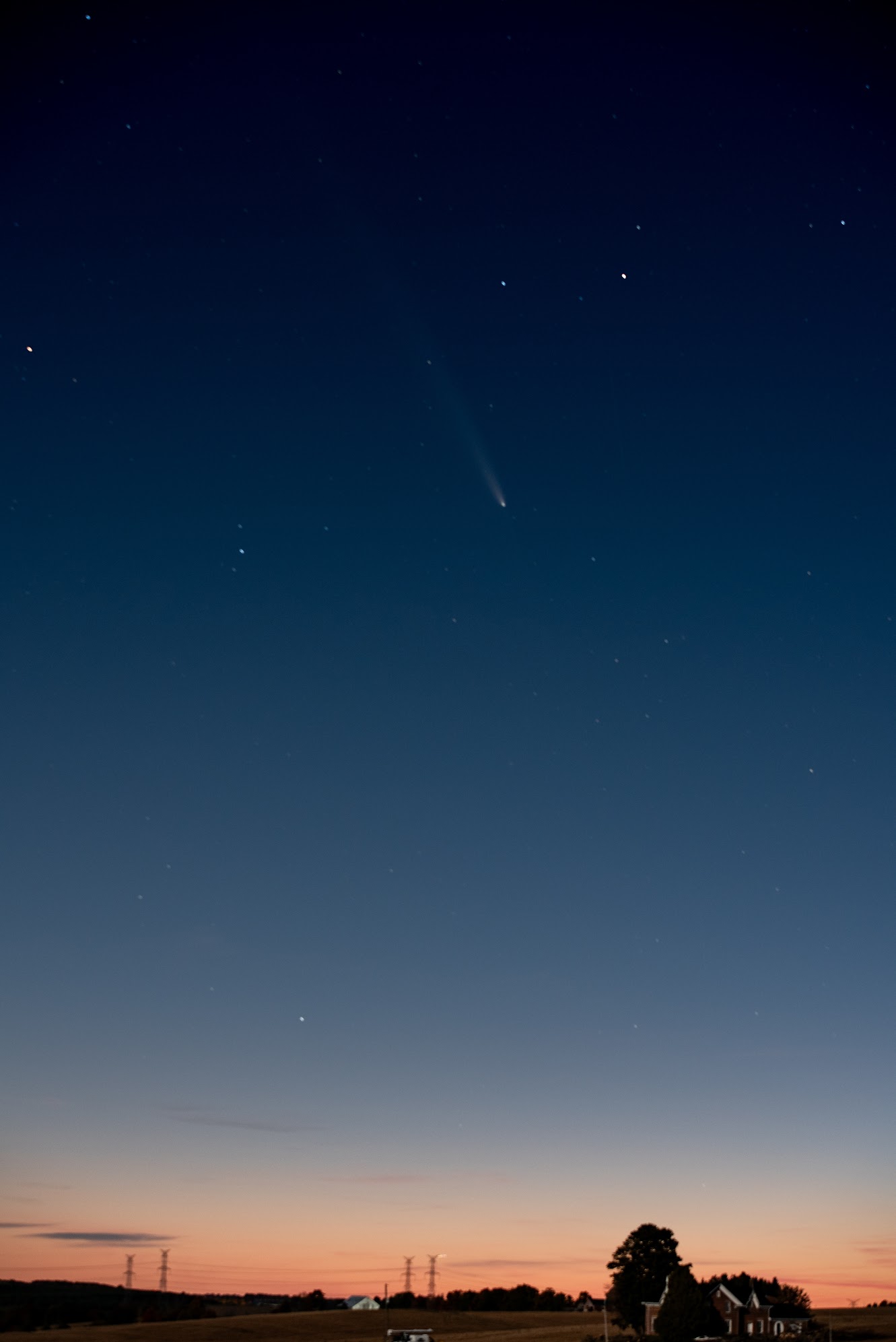 C/2023 A3 Tsuchinshan-ATLAS
So I had to go for the oldest trick in the book - make a composite shot. Next evening I went out again, this time looking for something to photograph for the foreground and then another one for the background.
I took multiple photos of the comet and painstakingly stacked them in Photoshop.
This is the final image of the C/2023 A3 Tsuchinshan-ATLAS. Could be better, but I was pretty happy with it.
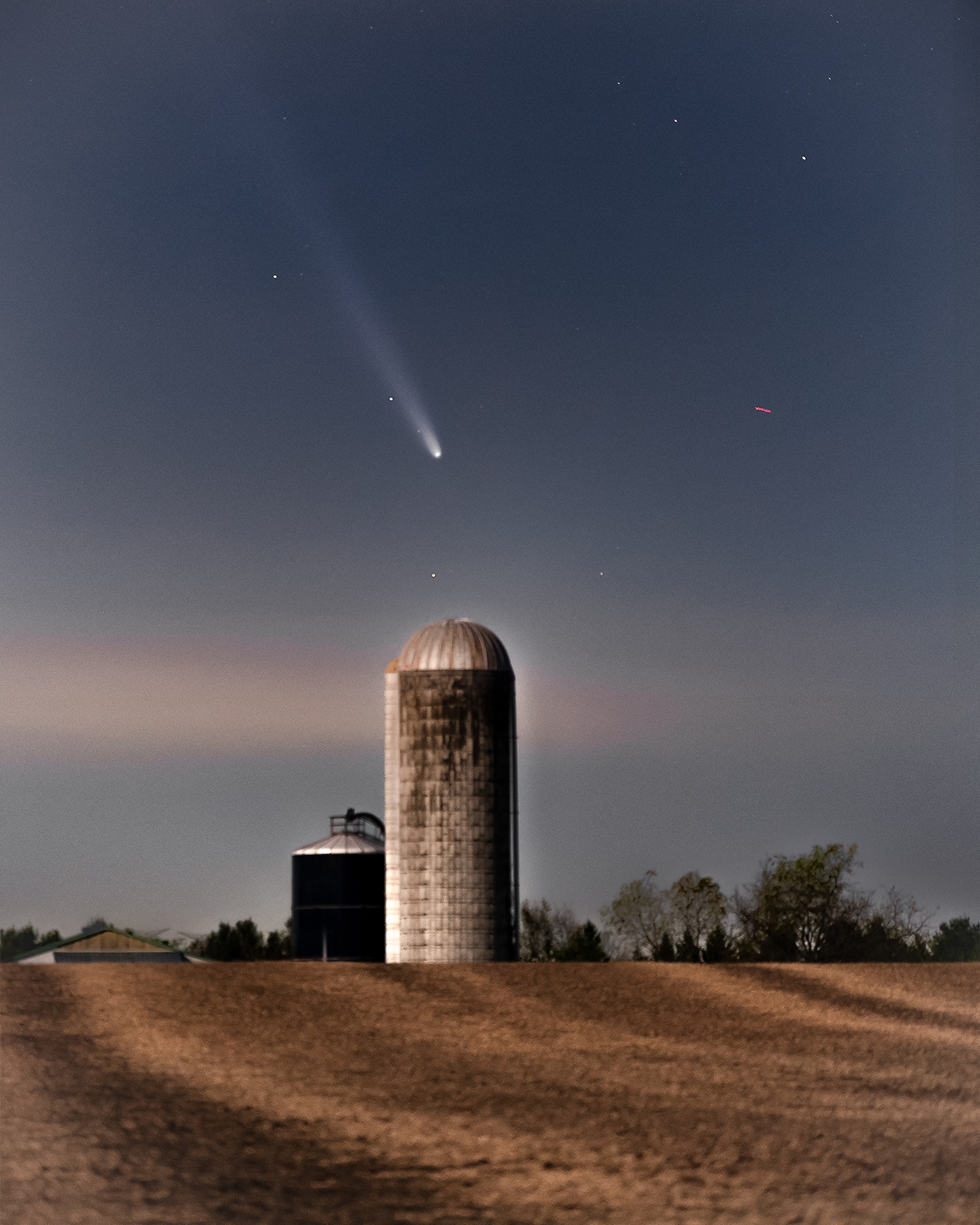 C/2023 A3 Tsuchinshan-ATLAS and a silo
Fast forward two years and I am better prepared for the next one – C/2025 A6 (Lemmon). I now have a star tracker and I've found a place with darker skies which is still relatively nearby. I also started using proper astrophotography software for stacking images – no more moving layers in Photoshop by hand!
 C/2025 A6 (Lemmon)
And couple of wide view images. The first one is a composite, but this time both foreground and background are properly aligned.
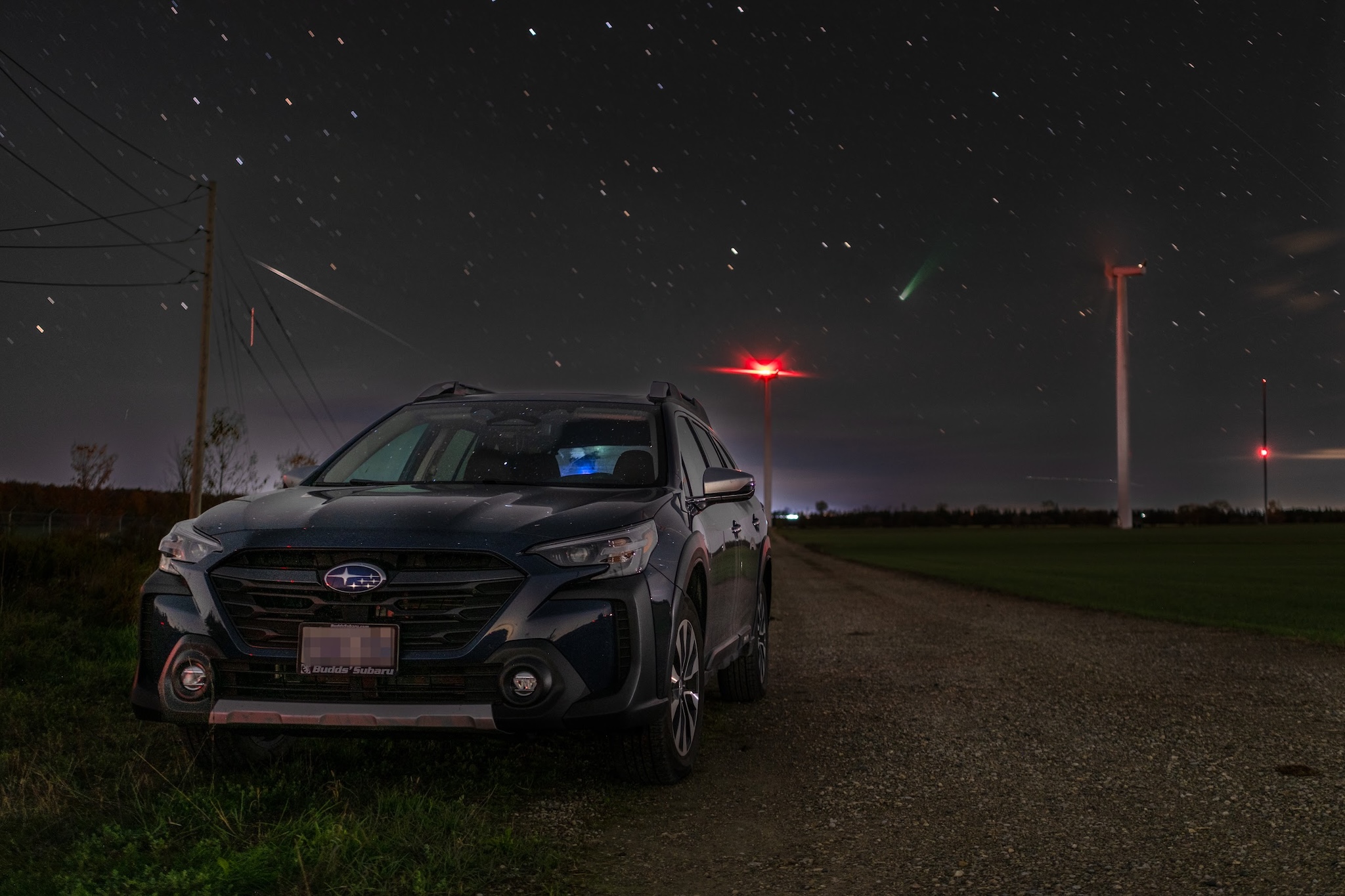 C/2025 A6 (Lemmon) and my car
And the second one is a single frame with some creating post-processing.
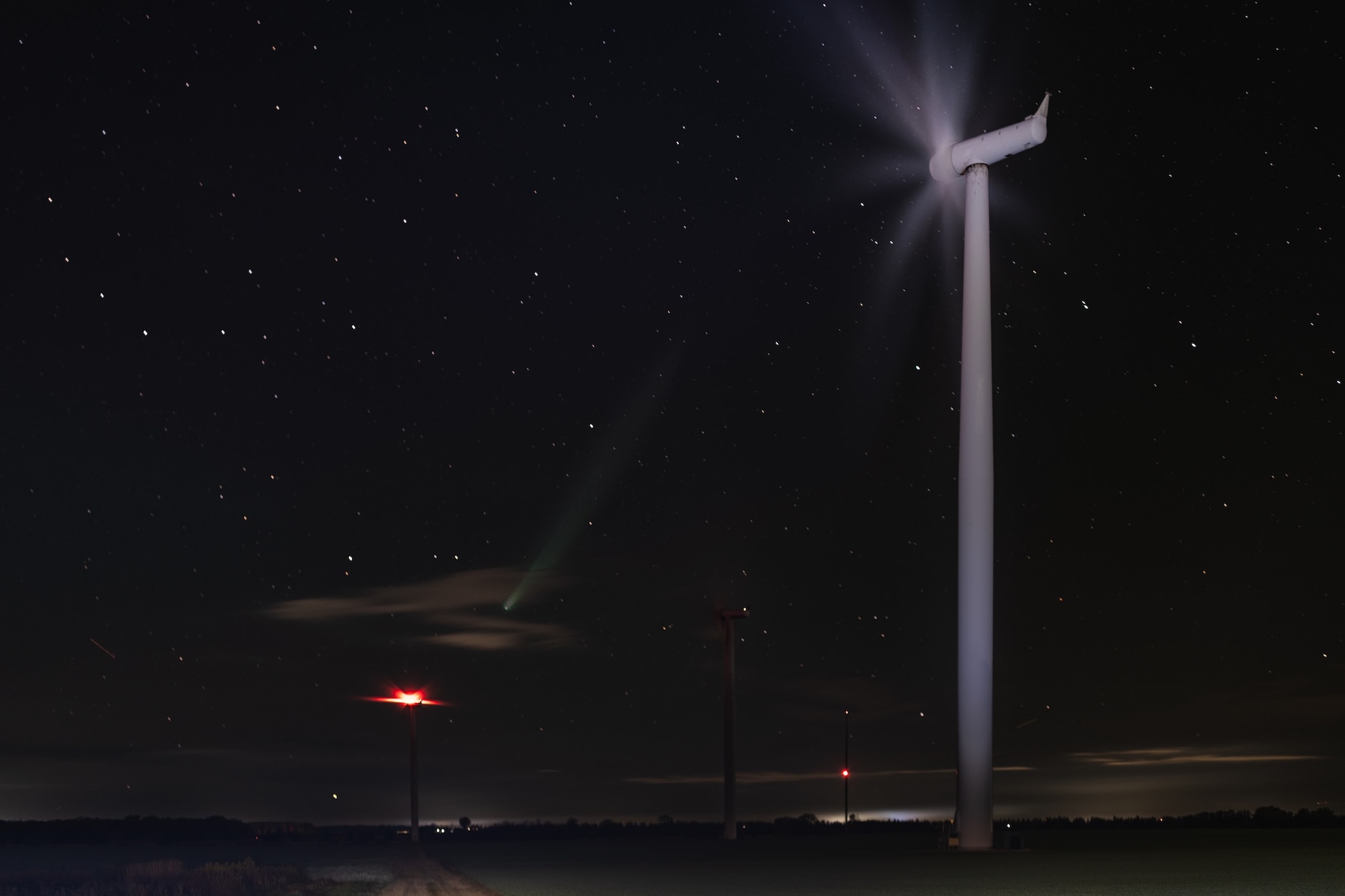 C/2025 A6 (Lemmon) and some wind turbines
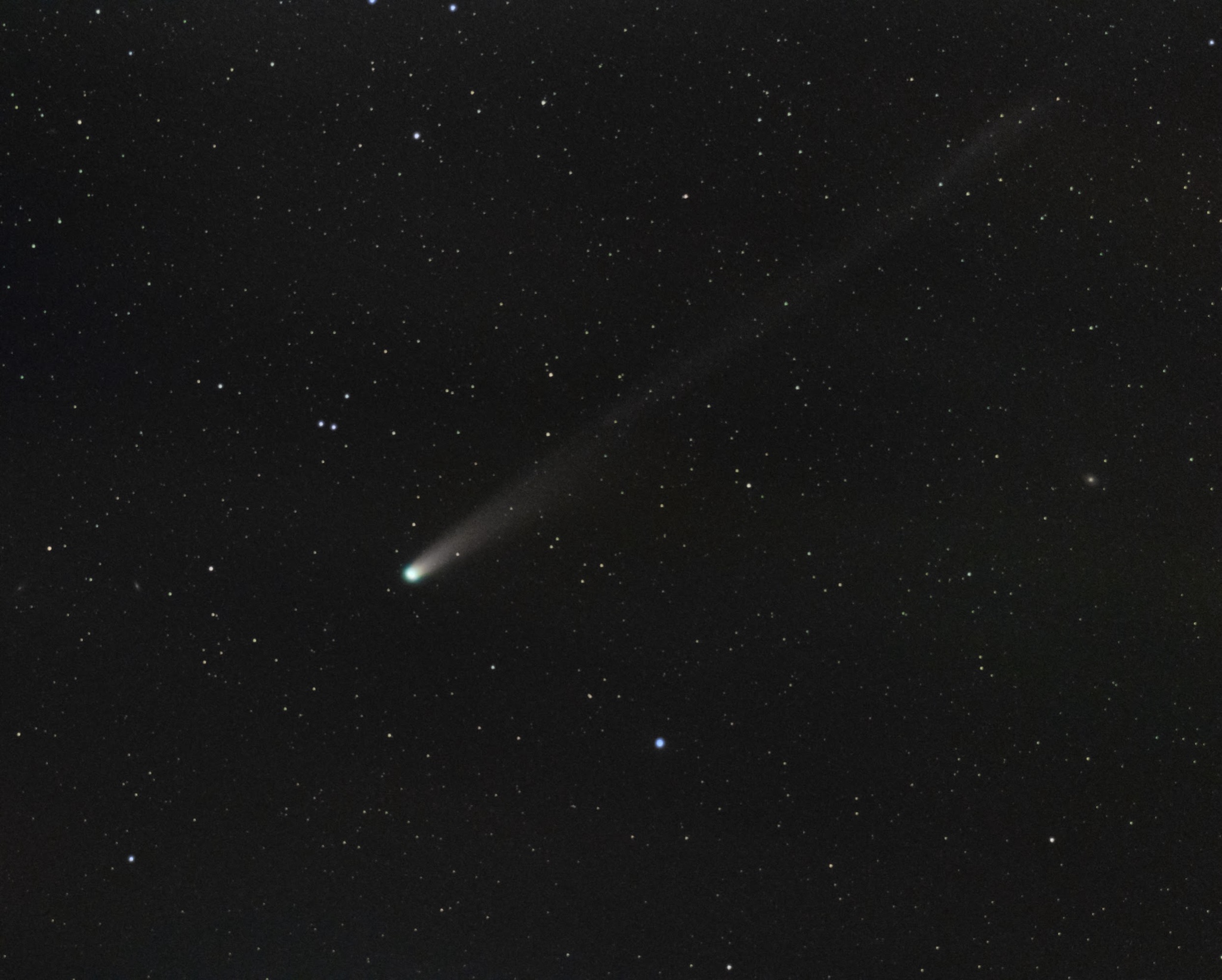
Just a couple weeks ago I found out that there's another comet passing through the solar system and it's bright enough to be seen with binoculars. I couldn't let this opportunity pass by.
This time, I had to head out in the early morning and be shooting about one hour before the sunrise. I always maintain that I am not a real astrophotographer — I am not willing to make sacrifices. I decided to simplify my life this time and use my smart telescope to take a photo.
I took the camera with star tracker with me, but ultimately failed to locate the comet. Smart telescope locked on it without any problems – using it amounts to cheating. I was taking pictures for an hour, but about 80% of them were unusable - star trails, light pollution and generally bad seeing because the target was low above the horizon.
Turned out, using a smart telescope was not as good an idea as I thought. I was ready to apply all my postprocessing skills that I've learnt in the last year, but I failed miserably. I managed to get a good photo of stars, but I could not align the comet core at all. Dwarf 3 dithers the frames a lot and the comet was all over the place. I am pretty sure that if I put more time into it, I will be able to make a better picture, but for now this is what I got.
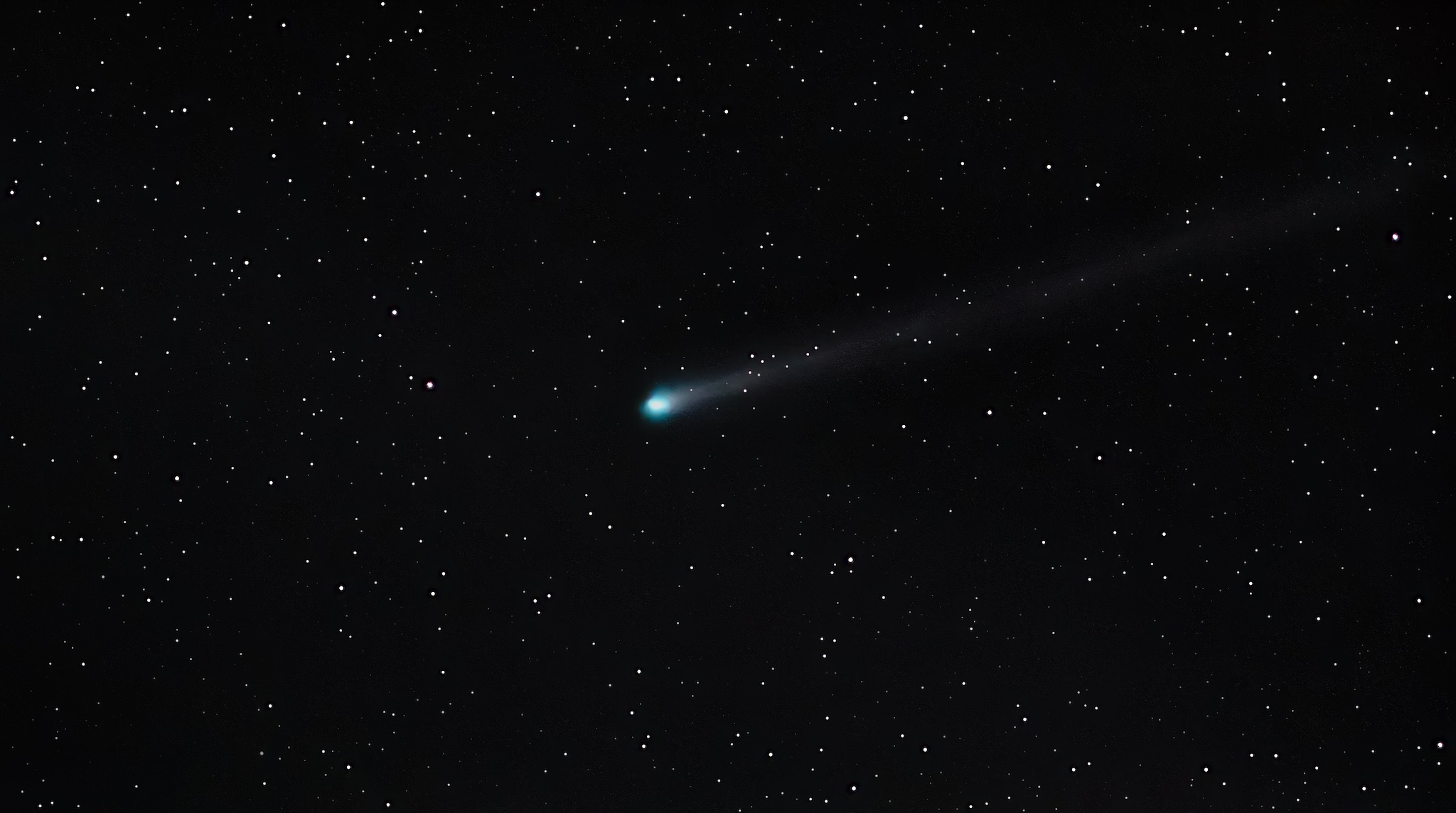 C/2025 R3 (PanSTARRS)