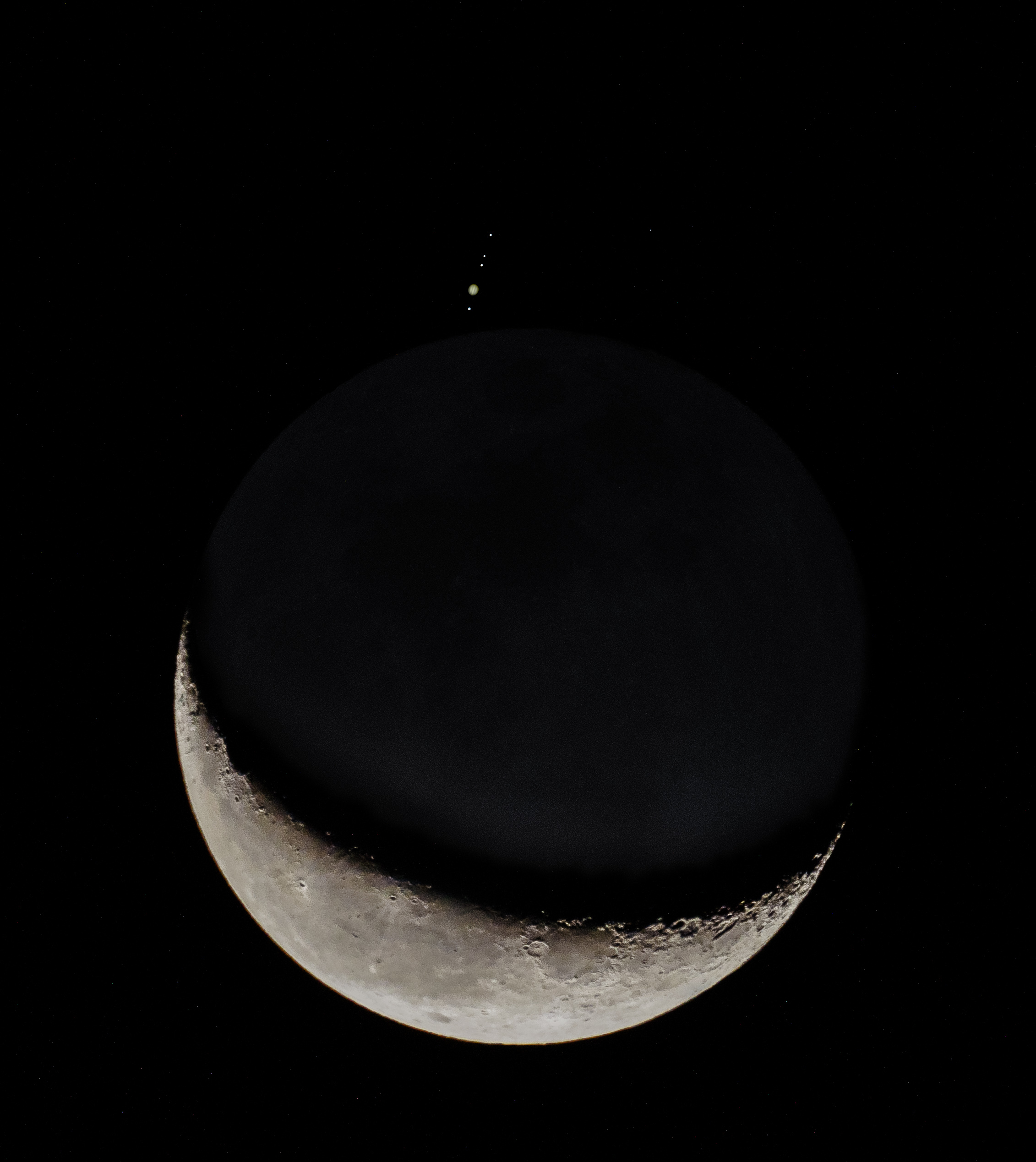
It's been some time since the last post. Unlike my usual rants of late, this post is about something that happens in the heavens.
On October 5th, 2026 someone posted in my astrophotography club's forum about the lunar occultation of Jupiter that's going to happen in the early hours of the morning of Oct 6th, 2026.
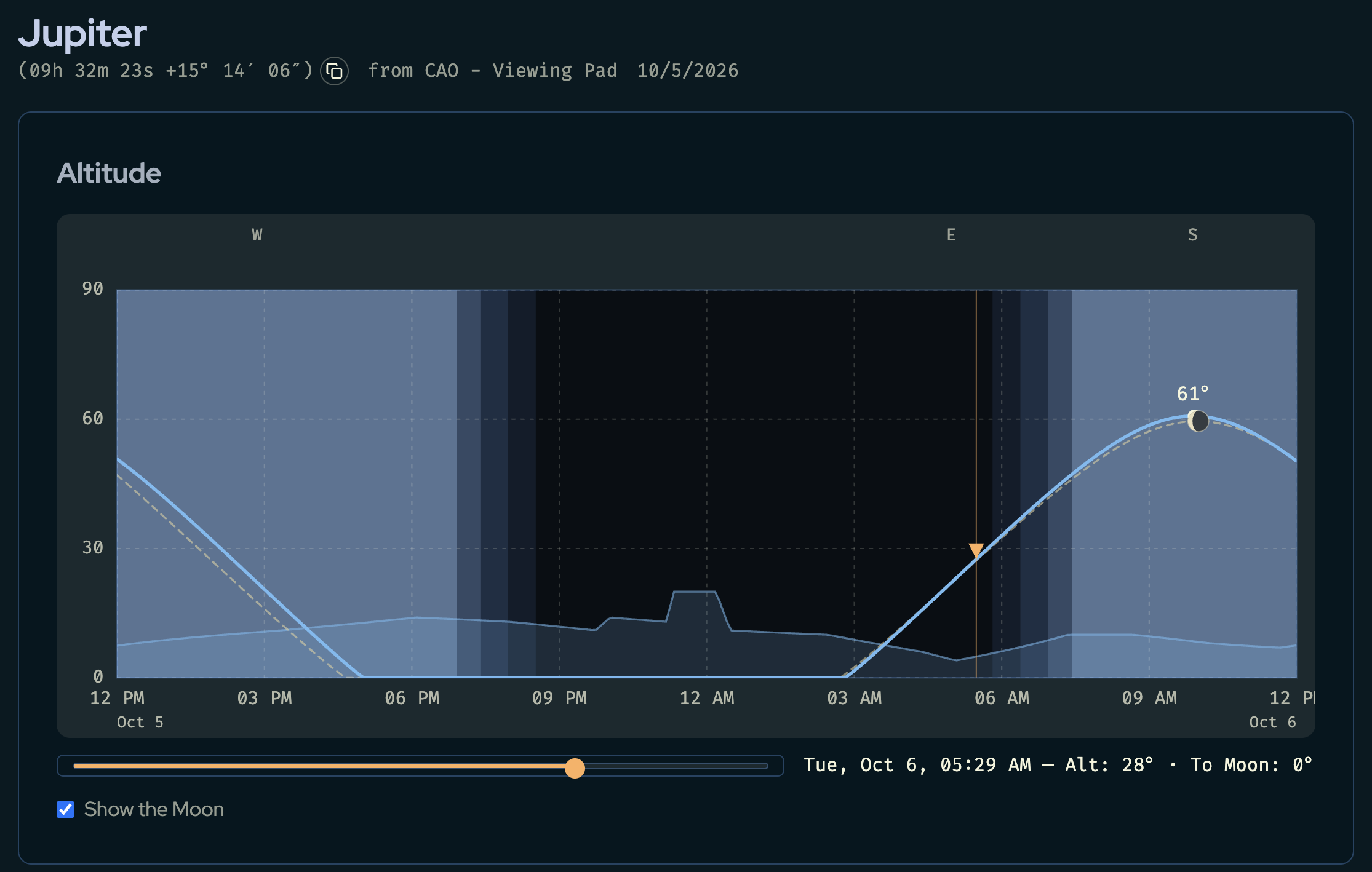
I checked my planner and indeed, the Moon and Jupiter will align almost perfectly.
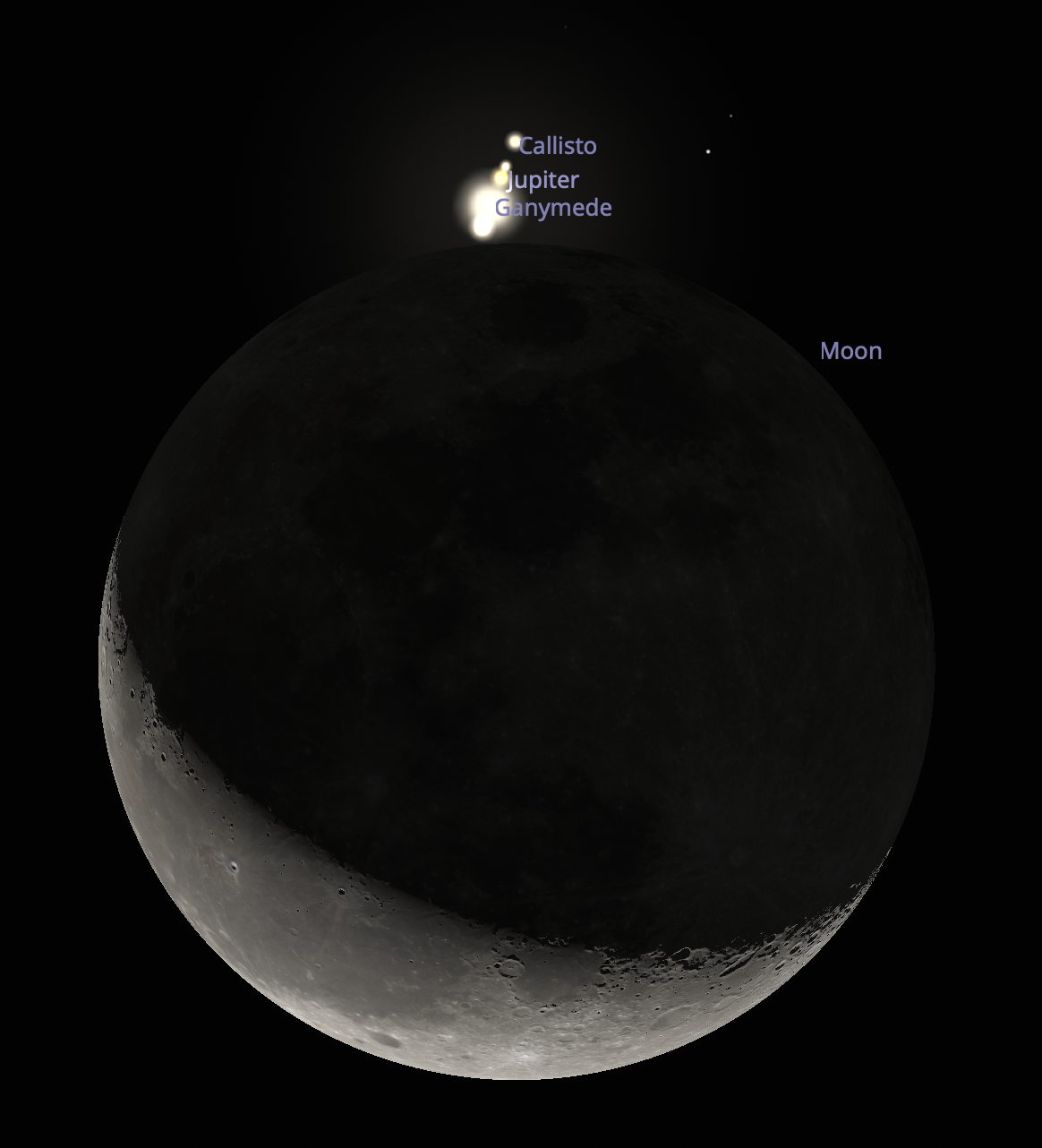
Next, I opened Stellarium and, lo and behold, Galilean moons and Jupiter are supposed to form a line.
Despite me being a fan of sleeping I decided to wake up at 5am and try and capture this.
I decided to shoot the "after" part of the occultation, mostly because that gave me another 30 minutes of sleep.
My plan was to shoot the bright side of the Moon and Jupiter in one series of shots, and the dark side of the Moon in earthshine and the Galilean moons in another.
I decided not to use the tracker and shoot everything just using the tripod. I needed to be fast anyway, as Jupiter moves away from the Moon at a noticeable speed.
I planned to make 4 master frames:
- bright side of the Moon
- earthshine
- Jupiter
- Jupiter's moons
and compose it together. This is where my inexperience played a role and ruined the shot I wanted.
I used 1/250s shutter speed and ISO 400 for the "bright" targets and 1/10s and ISO 3200 for the "dark" targets.
It turned out that the difference in brightness and contrast between bright Moon side and dark Moon side was so great that I could not comp them together in any reasonable way.
I stacked about 80 frames of Jupiter and 40 to 50 frames of Jupiter's moons, then composed them with the single frame of the bright side of the Moon.
I added one frame of the earthshine, heavily masked and with brightness lowered just to add the hint of the Moon's border.
The end result is worse than I wanted, but at the same time I got all four moons, Jupiter is recognizable with its colour bands, and the bright side of the Moon is properly exposed.
I am especially happy about the moons (from top to bottom): Europa, Callisto, Io and Ganymede, below Jupiter. It makes me feel like Galileo, watching these dots for the first time in his telescope.
Now I just need to wait for November 2037 to capture this again and fix my mistakes.